Home nursing
Wound Dressing at Home: When Can You Do It Yourself, and When Do You Need a Nurse?
Reviewed by the Lifetime Health medical team3 min read
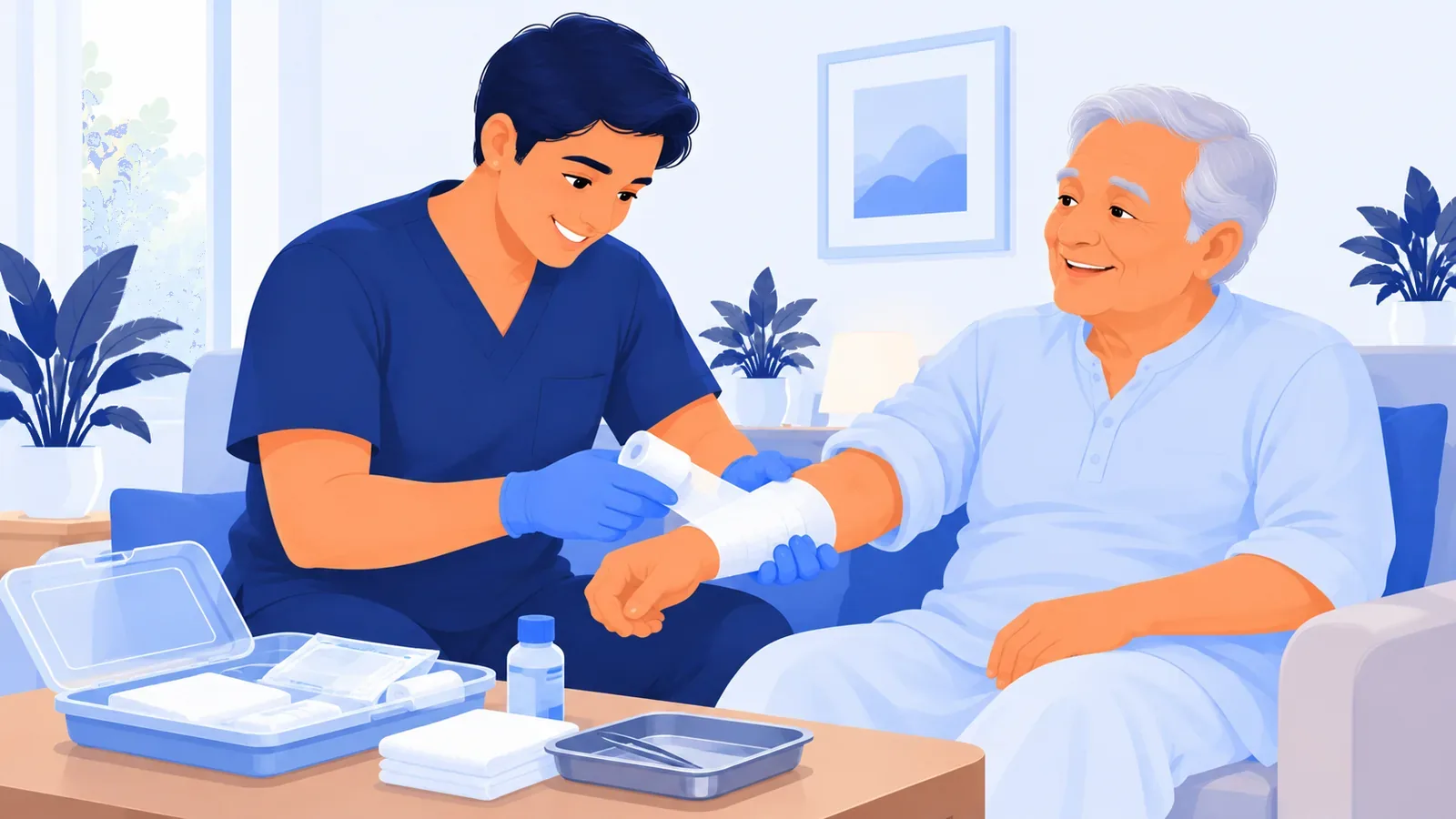
A small, clean cut can be dressed at home. Call a nurse for a surgical wound, any wound on a person with diabetes, a bedsore, a large or deep wound, or any wound that looks infected. Wound dressing is about 1 in 4 of Lifetime Health's 16,500+ home nursing visits.
Dress it yourself, or book a nurse?
| Wound | Who should dress it |
|---|---|
| Small, clean cut or graze | Family, with clean hands and a sterile dressing |
| Surgical wound, stitches or staples | Nurse, on the surgeon's schedule |
| Any wound on a person with diabetes | Nurse, plus a doctor's review |
| Bedsore or pressure wound | Nurse |
| Large, deep or gaping wound | Nurse, and a doctor first if it's new |
| Burn larger than the palm of the hand | Doctor first |
| Any wound with signs of infection | Doctor and nurse |
Signs a wound is infected
- Redness or warmth that spreads around the wound.
- Swelling, pus or a bad smell.
- Pain that gets worse instead of better.
- Fever or shivering.
- Wound edges that start to open.
If you see these, call the doctor the same day. Spreading redness with fever needs urgent care.
What happens at a home dressing visit
- The nurse arrives with a sealed single-use dressing kit.
- They check the wound: size, discharge and the skin around it.
- They clean it and apply the dressing your doctor prescribed.
- The visit is logged in the app, so changes in the wound can be tracked over time.
- The nurse tells you when the next change is due.
Between dressing changes
- Keep the dressing dry and in place. Don't lift it to look.
- Cover it with a waterproof layer when bathing, if the doctor allows bathing.
- Don't apply powders, home remedies or creams the doctor didn't prescribe.
- For people with diabetes, keep blood sugar in the range the doctor set. High sugar slows healing.
- Eat enough protein and drink enough fluids.
How Lifetime Health helps
In Bangalore, a nurse can reach you within 30 minutes for wound dressings, from 7 am to 9 pm. A small dressing costs ₹949 and a large one ₹1,199; on a 20-visit plan they start at ₹659 and ₹749 per visit. Limited offer: one nursing visit for ₹599. For a bedridden patient who also needs daily care, a 12 or 24 hour caregiver starts at ₹1,816 per day on a 30-day package, with the first session and assessment at ₹599.
FAQ
How often should a wound dressing be changed?
It depends on the wound and the dressing type. Follow the doctor's schedule; some need daily changes, others every few days.
Can a nurse remove stitches at home?
Yes. Suture removal at home costs ₹849. Ask your surgeon when the stitches are due.
Is it safe to bathe with a wound?
Only if the doctor allows it, with the dressing covered and kept dry.
What is the difference between a small and a large dressing?
It reflects the wound's size and the materials needed. The nurse confirms which one fits at the visit.